Table of Contents
TLDR: The signs you need a hearing aid rarely show up all at once. It’s usually small things — asking people to repeat themselves, turning the TV up, feeling exhausted after group conversations. Most people wait 7 years from noticing the first sign to actually getting help. That’s a long time to struggle unnecessarily. Advance Hearing center in Cambodia makes getting assessed simple.
Hearing loss doesn’t usually arrive like a light switch flipping off.
It creeps in. One day you’re asking your colleague to repeat something in a meeting. A few months later you’ve got the TV volume at 38 when it used to sit at 22. Then you start avoiding phone calls because you can never quite catch what the other person is saying.
None of these feel like a big deal on their own. That’s exactly why most people miss the signs you need a hearing aid until the problem is already affecting their daily life in a pretty serious way.
So let’s be specific about what to actually look for.
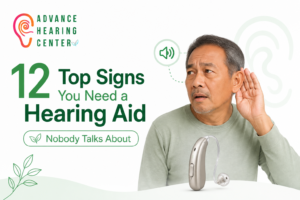
12 Signs You Need a Hearing Aid
1. You’re Always Asking People to Repeat Themselves
Not occasionally — regularly. If this is happening several times a day across different situations and different people, it’s not them mumbling. It’s worth paying attention to.
2. Conversations in Noisy Places Have Become Really Hard
A restaurant, a family gathering, a busy office — these are the environments where hearing loss shows up first. Your brain can normally filter background noise to focus on speech. When hearing loss kicks in, that filter stops working properly. Restaurants feel exhausting instead of enjoyable.
3. You Hear People Talking But Can’t Make Out the Words
This is one of the clearest signs you need a hearing aid, and a lot of people describe it exactly this way. “I can hear that someone’s talking, I just can’t understand what they’re saying.” That muffled, unclear quality to speech is very typical of sensorineural hearing loss — the most common type.
4. You’ve Turned the TV Volume Up Way Higher Than Before
Ask someone else in the house. If they’re regularly turning it down after you’ve been watching, or if you need subtitles now when you never used to, your hearing has changed.
5. Phone Calls Feel Like Hard Work
Phone calls remove all visual cues — no lip reading, no facial expressions, no body language. When your hearing is fine, that’s not a problem. When it isn’t, phone calls become genuinely stressful. A lot of people start avoiding calls without consciously connecting it to hearing loss.
6. You Feel Exhausted After Social Situations
This one catches people off guard. If you’re coming home from dinner with friends or a family event feeling completely drained in a way that doesn’t match how much physical activity you did — that’s often hearing fatigue. Your brain has been working overtime all evening just to follow conversations. It’s tiring in a very real way.
7. You’ve Started Withdrawing From Social Activities
This usually happens gradually. You skip the noisy birthday dinner because it’s “too loud.” You stop going to certain events. You start preferring one-on-one conversations in quiet settings. If this pattern sounds familiar, the signs you need a hearing aid are probably already there — you’ve just been adapting around them.
8. You Have Ringing in Your Ears (Tinnitus)
Tinnitus — that persistent ringing, buzzing, or hissing — is closely linked to hearing loss. Around 90% of people with tinnitus also have some degree of hearing loss. It doesn’t always mean you need a hearing aid immediately, but it’s a strong signal that your auditory system needs a proper evaluation.
9. You Struggle to Hear High-Pitched Sounds
Things like birds, a doorbell, a child’s voice, or the beep of a microwave — high-frequency sounds are often the first to go with age-related or noise-induced hearing loss. If you’ve noticed these sounds have gone quieter or disappeared entirely, that’s worth flagging.
10. You Miss Things People Say From Another Room
Shouted conversations across the house used to be easy. Now you either miss them completely or have to move closer to understand. Distance makes hearing harder for everyone, but if nearby rooms have become an issue, your hearing range has likely narrowed.
11. You’re Mishearing Words in Ways That Create Confusion
This is different from not hearing at all. It’s hearing something but getting the wrong word — “fish” instead of “dish,” “right” instead of “night.” These errors happen when your brain is trying to fill in gaps from an incomplete sound signal. It’s a very specific sign that hearing loss is affecting speech comprehension, not just volume.
12. Other People Have Mentioned It
This one matters more than most people admit. When someone close to you — a partner, a sibling, a friend — has brought up your hearing more than once, they’re usually right. They notice things you’ve adapted to without realising it. If multiple people have said something, that’s not nothing.
Quick Check: How Many of These Apply to You?
Sign | Applies to You? |
Asking people to repeat themselves often | Yes / No |
Struggling in noisy environments | Yes / No |
Hearing speech but not understanding words | Yes / No |
TV volume much higher than before | Yes / No |
Avoiding phone calls | Yes / No |
Feeling exhausted after social events | Yes / No |
Withdrawing from group situations | Yes / No |
Persistent ringing in ears (tinnitus) | Yes / No |
Missing high-pitched sounds | Yes / No |
Can’t hear from another room | Yes / No |
Mishearing words regularly | Yes / No |
Others have commented on your hearing | Yes / No |
If you ticked 3 or more, you’re already seeing signs you need a hearing aid. A proper hearing test will confirm what’s happening and how significant it is.
Why People Wait So Long (And Why That’s a Problem)
The average person waits about 7 years from noticing the first signs you need a hearing aid to actually doing something about it.
Part of that is denial. Part of it is the old stigma that hearing aids are for very old people. And part of it is just that hearing loss creeps in slowly enough that you can keep adapting — until you can’t.
The problem with waiting is that hearing loss left untreated doesn’t stay still. Research consistently links untreated hearing loss to:
- Faster cognitive decline and higher dementia risk
- Higher rates of depression and social anxiety
- Reduced work performance and income
- Increased risk of falls and accidents
- Greater social isolation over time
None of these are inevitable. But they’re all more likely when you ignore the signs you need a hearing aid and keep pushing it off.
Getting assessed early doesn’t mean you have to start wearing a device immediately. It just means you know where things stand and you have a professional helping you track it. That’s the sensible approach.
What Happens If You Ignore the Signs?
Hearing loss doesn’t usually cause pain, which makes it easy to deprioritise. But your brain keeps paying the cost even when you’re not consciously noticing it.
Every day with untreated hearing loss is a day your brain is working harder than it should — filling gaps, straining to catch words, compensating for sound it’s not getting. That extra cognitive load adds up. It’s not dramatic. It’s slow. But it chips away at focus, memory, and mental energy over time.
The flip side is that people who treat their hearing loss early tend to report genuinely better quality of life — better relationships, more energy, clearer thinking, and less anxiety in social situations. Addressing the signs you need a hearing aid early is almost always worth it.
What Happens at Advance Hearing center
At Advance Hearing center, a hearing assessment isn’t a rushed 10-minute thing. We do a full evaluation that covers:
- Pure-tone audiometry — measures your hearing across all key frequencies
- Speech discrimination testing — checks how well you understand speech, not just how loud it needs to be
- Tympanometry — assesses middle ear function to rule out other causes
- Tinnitus assessment if applicable
Based on those results, we give you a clear picture of where your hearing stands, whether you’d benefit from a hearing aid now, and what type and technology level would actually suit your lifestyle.
We carry premium hearing aids from the world’s leading brands — all genuine, warranty-backed, and fitted properly using real-ear measurement. If you do need a device, you’re not guessing. You’re getting something programmed specifically to your audiogram.
If you’ve been noticing hearing loss symptoms for a while and putting off getting them checked, now’s the time. Visit Advance Hearing center or check out our hearing aid repair and servicing page if you already own a device that’s underperforming.