Table of Contents
TLDR:
- Rechargeable hearing aids charge overnight like a phone no tiny batteries to handle daily
- Battery-powered hearing aids use small disposable zinc-air batteries that last 3 to 10 days
- In Cambodia’s heat and humidity, rechargeable models have a real advantage no battery corrosion risk
- Both types are available at Advance Hearing Center and both work well when fitted properly
- The right choice depends on your daily routine, not just the device itself
- Book a consultation at Hearing Aids Cambodia and our team will walk you through both options
When people first start searching at hearing aids, they focusing on the brand, the style, or the price. The battery question generally comes up later often when they are already sitting in the fitting appointment.
It should not be an afterthought. If your hearing aid is rechargeable or runs on expendable batteries affects your daily routine every single day you wear it. It moves how much you spend over time, how easy the device is to view after, and in Cambodia especially, how well it holds up against the heat and moisture.
Neither option is wrong. But one will suit you better than the other relying on how you live.
How Each One Works
Rechargeable hearing aids have a built-in lithium-ion battery the same technology used in smartphones. You spot the device in a charging dock all-night and it is ready to go in the morning. Most models give you 16 to 30 hours on a full charge. Some, like the Starkey Edge AI, go up to 51 hours. A rapid 15 to 30 minute charge gives you a few extra hours if you want it.
Battery-powered hearing aids use small zinc-air disposable batteries. You remove the used battery and snap in a new one. Depending on the size and how much you use the device, each battery lasts anywhere from 3 to 10 days. There are four battery sizes 10, 13, 312, and 675 and the right one depends on the style of device you have.
That is the basic difference. Everything else follows from there.
How They Compare Day to Day
Rechargeable | Battery-Powered | |
Daily routine | Place in dock overnight | Replace battery every 3 to 10 days |
Handling small parts | No | Yes small batteries, fiddly for some |
Running out of power unexpectedly | Possible if you forget to charge | Less likely with spare batteries carried |
Cost upfront | Slightly higher | Lower upfront cost |
Cost over time | Lower no ongoing battery purchase | Battery packs add up over years |
Works in power outages | Only if charged | Yes spare batteries always available |
Style options | Mostly RIC and BTE | Available across more styles including CIC |
Cambodia humidity | Better no battery compartment to corrode | Requires more careful battery storage |
Why Cambodia Changes the Calculation
Most rechargeable vs. battery articles are written for people in cooler, drier climates. Cambodia is different.
The heat here sits between 25 and 38 degrees most of the year. Humidity runs at 70 to 90 percent. Sweat is constant. That matters for hearing aids in a few specific ways.
Battery compartment corrosion is a real problem in humid climates. Zinc-air batteries produce a small amount of moisture as they work. In high humidity, that moisture has nowhere to go and over time it corrodes the battery contacts inside the device. This is one of the most common reasons battery-powered hearing aids fail early in tropical countries.
Rechargeable devices are sealed. There is no battery door, no compartment opening regularly, no moisture entry point from battery swaps. This makes them more resilient in Cambodia’s conditions, all else being equal.
Battery storage also matters here. Zinc-air batteries should be kept cool and dry. Leaving them on a bedside table or in a pocket in Cambodian heat reduces their shelf life and performance. You need to store them properly in a cool, dry place, not in the bathroom where humidity is highest.
If you spend a lot of time outdoors, commute by motorbike, or sweat heavily through the day, rechargeable hearing aids are generally a better fit for life here. That is not a sales pitch it is just what the conditions make practical.
Who Does Better With Rechargeable
People who want simplicity. Put them in the dock at night, pick them up in the morning. No batteries to buy, no size charts to remember, nothing to run out of in the middle of a meeting.
People with dexterity issues. Zinc-air batteries are very small. For anyone with arthritis, shaky hands, or weaker eyesight, swapping them every few days is genuinely difficult. Rechargeable removes that problem entirely.
Active people. If you exercise, work outdoors, or generally sweat more than average, rechargeable devices with sealed casings handle that environment better.
People who use Bluetooth a lot. Streaming from your phone or TV drains power faster. Rechargeable devices generally manage this better than disposable batteries, which can drop out faster under heavy streaming load.
Seniors who live alone. Not needing to manage tiny batteries removes a daily hassle that is easy to underestimate until it becomes frustrating.
Who Does Better With Battery-Powered
People who travel a lot to remote areas. If you are regularly somewhere without reliable electricity, spare batteries in your bag are more practical than relying on being able to charge overnight. Batteries do not need power sockets.
People who wear hearing aids part of the day, not all day. Rechargeable hearing aids are designed for full-day use. If you only wear your device for a few hours, the battery runs down whether you use it or not. Disposable batteries can sit in the device unpowered (with the tab on) without losing charge.
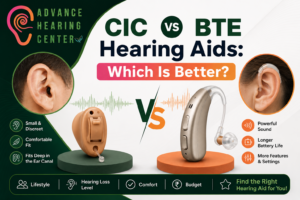
People who want smaller, more discreet styles. CIC and IIC styles the truly invisible options that sit deep inside the ear canal mostly come in battery-powered versions. The rechargeable components are too large to fit into the smallest casings. If invisibility is your top priority, battery-powered may be your only realistic option for the style you want.
People who worry about forgetting to charge. Some people are honest about this. If you know you will occasionally forget to put the device in the dock and you cannot tolerate the risk of a dead hearing aid, having spare batteries in your wallet is genuinely more reliable.
Battery Sizes A Simple Guide
If you go with a battery-powered device, you need to know which battery size your device takes. Every battery size has a color code to make it easier.
Battery Size | Color | Lasts | Common Device Types |
Size 10 | Yellow | 3 to 5 days | IIC and CIC (smallest, most discreet) |
Size 312 | Brown | 5 to 7 days | RIC and smaller BTE styles |
Size 13 | Orange | 8 to 10 days | Larger BTE styles |
Size 675 | Blue | Up to 14 days | Power devices for severe to profound loss |
In Cambodia’s humidity, store batteries in their original packaging in a cool spot. A small sealed container works well. Avoid the bathroom, glove compartments, or anywhere that gets hot and humid through the day. Always let a fresh battery breathe for 30 seconds to a minute after removing the tab before inserting it this activates the zinc-air chemistry and noticeably improves battery life.
The Cost Difference Over Time
This is something people underestimate when they choose battery-powered hearing aids because the upfront cost is lower.
A rechargeable hearing aid typically costs a little more upfront. But you spend nothing on batteries for the 4 to 5 years the internal battery lasts well.
With battery-powered aids, you are buying replacement batteries regularly. Depending on battery size and how much you use the device, that adds up to around USD 100 to 300 over three years for most wearers. More if you use a lot of Bluetooth streaming, which shortens battery life.
Over the full lifespan of a device, rechargeable usually comes out ahead on total cost. But if upfront cost is a real constraint right now, battery-powered is a reasonable choice that many people are very happy with.
What Advance Hearing Center Recommends
Honestly, it depends on the person in front of us.
Advance Hearing Center has been fitting hearing aids in Cambodia since 2018. Our audiologists trained in Singapore and we work with Phonak, Signia, ReSound, Oticon, Starkey, and Rexton all of which offer both rechargeable and battery-powered models across their ranges.
When a patient comes in, we look at a few things before making a recommendation:
- Do they have any dexterity or vision issues that make battery handling difficult?
- How much of the day do they actually wear the device?
- Do they travel to places without reliable electricity?
- What style of device suits their hearing profile and lifestyle?
- How important is discretion versus convenience?
The answers to those questions almost always point clearly to one option. Sometimes it is rechargeable. Sometimes it is disposable. There is no universal right answer.
What we do not do is recommend one just because it costs more or because it is newer. We recommend what will actually work for how that specific person lives.
You can read more about hearing aid batteries on our blog, or look at our hearing aid servicing page if you already own a device and want to know more about ongoing care.
A Note on Maintenance in Cambodia
Whichever type you choose, proper daily care matters more in Cambodia than in most places.
For rechargeable devices: use the charging dock every night, keep charging contacts clean, and keep the device away from direct heat. The charging case on many models also acts as a passive dehumidifier, which is genuinely useful here.
For battery-powered devices: store batteries properly, clean the battery compartment regularly, and check for any early signs of corrosion on the contacts. If you see a white or greenish residue around the battery door, bring the device in before it gets worse.
Advance Hearing Center hearing aid repair and servicing team handles both types and can spot moisture-related problems early before they become expensive repairs.
Visit Advance Hearing Center to book a consultation and find out which option suits your daily life in Cambodia.