Table of Contents
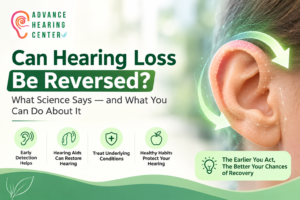
Someone asks us this almost every week at the clinic. A parent worried about their father, a young guy who works construction and just noticed a ringing in his ears, a woman who woke up one morning and one ear just wasn’t working right. Can hearing loss be reversed? Honestly, it depends on what’s causing it. Some cases get better on their own or with simple treatment. Others don’t, and that’s just the reality of how the ear works. Let’s go through it properly so you know where you actually stand.
TLDR
- Can hearing loss be reversed? Sometimes. It depends on the cause.
- Blocked ears from wax, fluid, or infection usually clear up and hearing comes back.
- Damage to the inner ear or hearing nerve is usually permanent.
- Sudden hearing loss is an emergency. Get seen within 72 hours if you want any real chance of it coming back.
- Age related hearing loss and noise damage don’t reverse, but hearing aids handle them well.
- Hearing aids and cochlear implants don’t fix the damage. They just help you hear despite it.
- If someone’s selling you drops or supplements that “reverse” hearing loss, be skeptical.
- Get a hearing test sooner rather than later. It genuinely changes your options.
What hearing loss actually is
Hearing loss just means sound isn’t getting through the way it should. Sometimes it creeps up over years and you barely notice until someone points it out. Sometimes it hits overnight. It can be in one ear or both.
Before we can answer can hearing loss be reversed, you need to know there isn’t one single answer, because there isn’t one single type of hearing loss.
So can hearing loss be reversed? Here’s the real answer
This is what everyone actually wants to know, so let’s not bury it. Whether hearing loss can be reversed depends almost entirely on where in the ear the problem is sitting.
Doctors group hearing loss into three buckets:
- Conductive hearing loss, a blockage somewhere in the outer or middle ear
- Sensorineural hearing loss, damage to the inner ear or the nerve that carries sound to the brain
- Mixed hearing loss, a bit of both
Conductive hearing loss can often be fixed once you deal with whatever’s causing the blockage. Sensorineural hearing loss usually can’t, because it involves tiny hair cells inside the cochlea that don’t grow back once they’re gone. That single fact is why hearing specialists everywhere give roughly the same answer. Blockages tend to be fixable. Nerve damage usually isn’t.
Conductive hearing loss, the reversible kind
This is where there’s actually good news. Conductive hearing loss happens when something is physically stopping sound from reaching your inner ear. Usual suspects are:
- Earwax buildup
- An ear infection
- Fluid sitting behind the eardrum
- A perforated eardrum
- Something lodged in the ear canal (kids are especially good at this)
Deal with the cause and hearing often comes right back, sometimes within days. Clear the wax, treat the infection, drain the fluid, and you’re often done. If there’s structural damage, like a torn eardrum, a small surgery can fix it, and hearing usually improves as it heals.
Sensorineural hearing loss, the kind that usually sticks around
This is the most common type of hearing loss in adults, and it’s the harder answer to can hearing loss be reversed. It happens when the hair cells in your cochlea, or the nerve itself, get damaged. Once these cells are gone, they don’t come back on their own.
Things that cause this type include:
- Aging, which doctors call presbycusis
- Years of exposure to loud noise
- Certain medications
- Head injuries
- Some infections and illnesses
- Genetics
The good news, if you can call it that, is that even though this kind of loss doesn’t reverse, it’s very manageable. A well fitted hearing aid can bring speech and everyday sound back into a range where your brain can make sense of it again.
The exception, sudden sensorineural hearing loss
There’s one case worth knowing about because timing actually matters here. Sudden sensorineural hearing loss (SSHL) comes on fast, sometimes within a day, often in just one ear. If this happens to you, don’t wait it out. Getting to a doctor within 72 hours gives you the best shot at recovery, and for some people, treatment (usually steroids) brings hearing back either fully or partly. This is genuinely one of the rare situations where quick action can reverse hearing loss.
What about hearing loss in just one ear
We see this a fair bit too. One ear stops working properly while the other seems fine. It could be a wax blockage, an infection, an injury, or sudden sensorineural hearing loss. Same rule applies, if it’s a blockage or infection, there’s a good chance it clears up. If it’s nerve damage, it’s probably permanent, though a hearing aid can still even things out so both ears work together better.
The myths that keep going around
There’s no shortage of ads online promising to reverse hearing loss overnight with drops, vitamins, or some special ear exercise. Here’s the honest version:
- No supplement regrows damaged hair cells. None.
- Ear exercises don’t undo nerve damage.
- Home remedies won’t touch sensorineural hearing loss.
- Those “miracle” hearing drops sold on random websites aren’t reversing anyone’s permanent hearing loss.
If something promises to fix all hearing loss fast, take it with a grain of salt and talk to an actual hearing professional before you spend money on it.
What treatment actually looks like today
Depending on the type and cause, here’s what real treatment involves:
- Earwax removal for blockage related loss
- Antibiotics or ear drops for infections
- Steroids for sudden sensorineural hearing loss, if you get treated early enough
- Surgery for structural problems like a damaged eardrum
- Hearing aids for permanent sensorineural or age related hearing loss
- Cochlear implants when hearing aids alone aren’t enough for severe to profound loss
If you’ve reached the point where hearing aids aren’t cutting it, it’s worth learning more about cochlear implants and whether they’re a fit for you.
Things you can do to protect the hearing you have
You can’t regrow hair cells with lifestyle changes, but you can absolutely protect the ones you’ve still got. Some habits worth keeping:
- Wear ear protection around loud noise, always
- Keep your ears dry and reasonably clean
- Manage conditions like diabetes and high blood pressure, since they affect ear health too
- Eat well, since good blood flow supports your ears just like it supports everything else
- Never put anything smaller than your elbow in your ear canal
- Get your hearing checked regularly, especially once you’re past 50
Signs it’s time to get checked
Don’t wait until it’s obviously bad. Common early signs include asking people to repeat themselves a lot, turning the TV up louder than everyone else wants, struggling in noisy restaurants, or a ringing that won’t quit. If any of that sounds familiar, take a look at these signs of hearing loss and see how many match what you’re experiencing.
The next step from there is simple. Book a hearing test in Cambodia and find out exactly what’s going on. Testing early is really the only way to know whether your hearing loss can be reversed or whether it needs to be managed long term.
When you should actually see someone
Go see a specialist without delay if:
- Your hearing loss showed up suddenly
- Only one ear is affected
- There’s pain, discharge, or ringing along with it
- It’s been getting worse over the past few months
- It’s already messing with your work or daily life
A proper exam will tell you exactly what type of hearing loss you’re dealing with and whether it’s one of the ones that can actually be reversed.
How we can help at Advance Hearing Center
At Advance Hearing Center, we test people’s hearing across Cambodia every day, and we tell them the truth about what we find. If it looks reversible, we’ll walk you through the treatment. If it’s not, we’ll help you find the right Hearing Aids Cambodia option so daily life sounds clear again. Understanding the causes of hearing loss is really the starting point, and that’s exactly where our team begins with every patient who walks through the door.
If you’re not sure what’s going on with your hearing, the best move is a proper test rather than guessing off a blog post. Come talk to our team at Advance Hearing Center and we’ll help you figure out what’s actually happening and what to do about it.