High-frequency hearing loss is one of the most common types of age-related or noise-induced hearing loss. People with this condition often struggle to hear treble sounds, such as birds chirping, children’s voices, or consonant sounds like “s,” “f,” and “th.” This makes speech harder to follow, especially in noisy environments.
Fortunately, hearing aids for high-frequency hearing loss are designed with advanced features that restore clarity, enhance speech recognition, and make daily communication easier. In this guide, we’ll explore what high-frequency hearing loss is, how specialized devices work, and the best HF hearing loss solutions available today.
Understanding High-Frequency Hearing Loss
High-frequency hearing loss occurs when the inner ear’s hair cells responsible for detecting high-pitched sounds become damaged. Some common causes include:
- Age-related decline (Presbycusis): A natural process where hearing sensitivity reduces over time.
- Noise exposure: Long-term exposure to loud sounds, concerts, or machinery, hearing tests in Cambodia
- Genetics: Family history of hearing impairment.
- Ototoxic medications: Certain drugs that affect the inner ear.
People with this condition may say, “I can hear people talking, but I can’t understand what they’re saying.” This happens because speech clarity depends heavily on high-frequency sounds.
Challenges of High-Frequency Hearing Loss
Living with untreated high-frequency loss can be frustrating:
- Difficulty hearing women’s and children’s voices.
- Struggling with group conversations or background noise.
- Missing environmental sounds like alarms or birds.
- Increased listening effort, leading to fatigue.
- Risk of social withdrawal and isolation.
These challenges highlight why choosing the right hearing aid for treble loss is essential for maintaining communication and quality of life.
How Hearing Aids Help with High-Frequency Hearing Loss
Modern technology offers specialized high-frequency amplification to target treble sounds without making low-pitched sounds overwhelming. Here’s how:
- Specialized Hearing Aid Programming: Audiologists can program devices to boost only the frequencies where loss is present. This ensures balanced, natural hearing.
- Frequency Lowering Technology: For severe treble loss, some devices shift high-pitched sounds into lower, more audible ranges while preserving speech clarity.
- Directional Microphones: Help focus on speech in front of the listener, reducing background distractions.
- Noise Reduction Features: Improves listening comfort in noisy environments such as restaurants or busy streets.
- Connectivity with Smartphones & TVs: Direct streaming provides crystal-clear sound for calls, music, and television, like Bluetooth hearing aids
Best Types of Hearing Aids for High-Frequency Hearing Loss
When choosing HF hearing loss solutions, certain styles and technologies stand out:
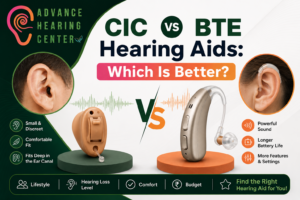
1. Receiver-in-Canal (RIC) Hearing Aids
- Best for discreet use and flexibility.
- Provide clear high-frequency amplification with advanced tuning.
- Comfortable fit for long-term wear.
2. Behind-the-Ear (BTE) Hearing Aids
- Suitable for moderate-to-severe treble loss.
- Offer more power and longer battery life.
- Compatible with telecoil for public venue access.
3. In-the-Ear (ITE) Hearing Aids
- Custom-molded for comfort.
- Can be programmed for specialized high-frequency tuning.
Importance of Hearing Aid Tuning
One-size-fits-all does not work for high-frequency hearing loss. Hearing aid tuning plays a major role in comfort and performance. An audiologist will:
- Identify your audiogram profile to see where treble loss occurs.
- Adjust amplification settings to emphasize clarity.
- Fine-tune programs for different environments (quiet, noisy, outdoors).
- Regularly update settings as hearing changes over time.
Lifestyle Benefits of Using Specialized Hearing Aids
With the right device, individuals notice immediate improvements:
- Clearer conversations with family, friends, and colleagues.
- Reduced listening effort, making socializing less tiring.
- Enhanced safety from hearing alarms, traffic, and warnings.
- Social engagement, preventing isolation and depression.
- Better quality of life, with access to everyday sounds often missed.
Diet and Habits to Support Hearing Health
While hearing aids provide the most direct solution, lifestyle habits also help:
- Diet for hearing health: Eat foods rich in Omega-3s, folate, magnesium, and vitamins C & E.
- Hearing exercises: Practice listening in noisy settings, using audio training apps, and memory games.
- Protect ears from further damage: Use earplugs in noisy environments.
- Regular hearing check-ups: Monitor hearing to adjust programming as needed.
Leading Brands Offering High-Frequency Hearing Solutions
Top manufacturers provide advanced hearing aid models with specialized programming:
- Phonak: Known for frequency-lowering technology.
- Signia: Offers tailored treble amplification and clear sound processing.
- Starkey: AI-powered devices with personalized sound adjustments.
- ReSound: Natural sound profiles with strong speech clarity features.
Each brand provides options for mild to severe high-frequency hearing loss, with RIC and BTE designs being the most recommended.
Tips for Choosing the Best Hearing Aid for High-Frequency Loss
Selecting the right hearing aid for high-frequency loss requires careful consideration:
- Get a professional hearing test – An audiologist can map your exact hearing profile and recommend the most suitable device for your needs.
- Consider future adaptability – Choose a hearing aid that allows fine-tuning or upgrades so it can adjust if your hearing changes over time.
- Choose a model with rechargeable options – Rechargeable batteries make daily use easier and eliminate the hassle of frequent replacements.
- Look for Bluetooth connectivity – Modern devices can stream calls, music, and TV directly to your hearing aid, making them more versatile for daily life.
- Prioritize comfort and sound quality – Beyond price, ensure the device fits well, feels natural, and provides clear sound in different environments.
Conclusion
High-frequency hearing loss can significantly affect communication and quality of life, but modern technology offers effective solutions. With high-frequency amplification, specialized programming, and frequency-lowering features, today’s devices are more advanced than ever.
Whether you choose RIC, BTE, or ITE hearing aids, the key is proper tuning and support from an experienced audiologist. Combined with healthy lifestyle habits, these devices can restore confidence, social engagement, and independence.
If you’re struggling with high-pitched sounds, don’t delay. The right high-frequency hearing aids can bring clarity back into your world.