Table of Contents
TLDR: Knowing how to care for hearing aids in humidity is genuinely important in Cambodia. The country sits at 70–90% humidity for most of the year, and that constant moisture is the number one reason hearing aids fail early. Daily drying, proper storage, regular cleaning, and a dehumidifier are the basics — but there’s more to it than that. advance hearing center has been helping patients in Cambodia protect and maintain their devices since 2018. If your device isn’t performing the way it should, our hearing aid servicing team can tell you exactly what’s going on.
Cambodia is a tough place to own a hearing aid.
Not because devices are hard to find or support is unavailable — advance hearing center takes care of that. But because the climate here is genuinely brutal for any kind of electronics, and hearing aids sit inside your ear canal for up to 16 hours a day in that heat and moisture.
Most people only think about how to care for hearing aids in humidity after something goes wrong. The sound cuts in and out. The device starts making crackling noises. Battery life suddenly drops. Or it just stops working one day without any obvious reason.
In most of these cases, moisture damage is behind it. And most of it was preventable.
Why Humidity Damages Hearing Aids
Before getting into the care routine, it helps to understand what humidity is actually doing to your device.
A hearing aid is a small, precise electronic device. Inside that casing are a microphone, amplifier, receiver, processor chip, and either a battery or charging circuit. All of these components are sensitive to moisture in different ways.
When humid air gets inside the casing — which happens constantly in Cambodia — it forms condensation on metal contacts and circuit boards. Over time, that condensation causes:
- Corrosion on battery contacts — which leads to intermittent power failure and shortened battery life
- Receiver damage — the receiver (the part that delivers sound into your ear) is particularly vulnerable; moisture causes distortion and eventually complete failure
- Microphone blockages — moisture mixes with earwax and debris to form a paste that clogs the microphone ports
- Circuit board corrosion — the most serious damage, often requiring professional repair or full component replacement
- Feedback and whistling — caused by moisture affecting the seal between the device and ear canal
Moisture damage accounts for around 68% of hearing aid warranty claims globally. In Cambodia, with humidity regularly above 85%, that number is almost certainly higher among local users.
Knowing how to care for hearing aids in humidity properly means you’re protecting a significant investment and avoiding the frustration of a device that fails when you need it most.
Daily Routine: What You Should Be Doing Every Night
This is the foundation. If you do nothing else, do this.
Wipe the device down before storing it. Use a soft, dry microfiber cloth — not a damp cloth, not a tissue, and definitely not alcohol wipes or household cleaners. Wipe the entire outer shell to remove sweat, skin oils, and surface moisture.
Brush the microphone ports. Hold the device upside down while brushing so debris falls out rather than further in. Use the small soft-bristle brush that came with your hearing aid. The microphone is one of the most exposed parts and picks up the most debris.
Check and replace the wax guard. In Cambodia’s heat, ears produce more wax than in cooler climates. Wax guards block earwax from reaching the receiver. When they look discolored or clogged, replace them. Most people in Cambodia need to do this every two to three weeks.
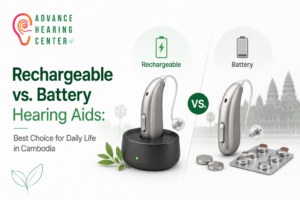
Open the battery door overnight. For non-rechargeable devices, this lets trapped moisture escape and prevents battery contact corrosion. For rechargeable devices, place them in the charging case — most modern cases include passive dehumidifying function.
Put them in a dehumidifier. In Cambodia, this step isn’t optional. It’s genuinely necessary. More on this below.
The Dehumidifier — Your Most Important Tool in Cambodia
If you’re serious about knowing how to care for hearing aids in humidity, a hearing aid dehumidifier is the single best investment you can make outside of the device itself.
There are two main types:
Passive dehumidifier (drying jar with desiccant): A small container with silica gel or desiccant crystals that draw moisture out of the device overnight. These work reasonably well but need the desiccant replaced or recharged regularly — every few weeks in high humidity environments like Cambodia.
Electronic dehumidifier (active drying station): Uses gentle heat, airflow, and sometimes UV light to actively pull moisture out of the hearing aid. More effective than passive options, and many models also sanitise the device. Studies show that people who use active drying systems need hearing aid repairs roughly every 27 months — compared to every 10 months for those who don’t dry their devices at all.
In Cambodia, an electronic dehumidifier is the smarter choice. The passive ones can struggle to keep up when ambient humidity is consistently high.
A few things to look for when choosing one:
- Rechargeable charging cases with built-in drying (some Phonak and Oticon models include this)
- UV sanitising function — particularly useful given how quickly bacteria grows in warm, humid conditions
- Timer function so it runs overnight automatically
Advance hearing center stocks and recommends specific drying solutions depending on the hearing aid brand and style you wear. Ask our team when you come in for a fitting or servicing visit.
Weekly Checks That Take Five Minutes
Once a week, go a little deeper than the nightly routine.
Inspect the tubing on BTE devices. The tubing connecting the device to the earmold can harden, crack, or discolor in high humidity. Once it starts looking stiff or yellowed, it needs replacing — this is a routine part of a professional servicing visit at advance hearing center.
Check the dome on RIC devices. The silicone dome sits in the ear canal and takes a lot of wear. In Cambodia’s climate, domes can degrade faster than the typical 4–6 week replacement schedule. If it looks misshapen or has visible buildup, swap it out.
Do a sound quality check. Put them in, listen. Any crackling, fading, or unusual feedback that wasn’t there before is a signal something needs attention — usually either a wax blockage or moisture in the receiver.
What Not to Do (These Mistakes Are Common)
A lot of hearing aid damage happens because of well-intentioned but wrong cleaning habits. Here’s what to avoid:
Mistake | Why It’s a Problem |
Using cotton swabs | Pushes wax and debris deeper into ports |
Storing in the bathroom | Steam from showers accelerates moisture damage |
Using alcohol wipes | Strips protective coating off the shell |
Leaving in a hot car | Heat damages plastic casing and internal components |
Using a hairdryer to dry them | Excessive heat warps components and damages electronics |
Storing in a closed case without drying first | Traps moisture inside with the device |
Leaving dead batteries inside | Increases corrosion risk at battery contacts |
Wearing during outdoor showers or rain | Even water-resistant devices have limits |
How to Care for Hearing Aids in Humidity: Style-Specific Tips
Different hearing aid styles face slightly different risks. Here’s what matters for each:
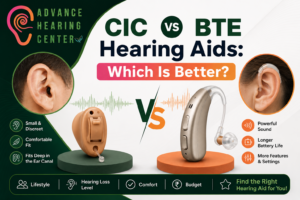
BTE (Behind-the-Ear): The tubing and earmold are the main moisture concerns. Tubing can be detached and rinsed with warm water — just make sure it’s bone dry before reattaching. Earmolds can also be washed the same way. Never submerge the main electronic housing.
RIC (Receiver-in-Canal): The thin receiver wire runs outside the casing and is more exposed than on BTE models. Handle it carefully when cleaning. Replace domes regularly — every 4 weeks minimum in Cambodia. The wax guard sits right at the receiver tip and needs frequent checking.
ITE / ITC / CIC (Custom In-Ear styles): These sit fully inside the ear and accumulate wax faster. Clean the vents and ports carefully with a brush and wax pick daily. Never use water on in-ear styles — wipe with a dry cloth only. The microphone ports on full-shell ITE devices also need regular brushing.
Sweat Management — A Cambodia-Specific Problem
This is one thing most generic hearing aid care guides don’t address properly for tropical climates.
Sweat is one of the biggest moisture risks for hearing aids in Cambodia — not just rain or humidity in the air, but what comes directly off your skin. Sweat is also slightly salty and acidic, which makes it more corrosive than clean water.
A few practical things that actually help:
- Hearing aid sweatbands — soft fabric sleeves that slip over BTE and RIC devices and absorb perspiration before it reaches the casing
- Nano-coated devices — many current hearing aids (ReSound, Oticon, Phonak, Signia) have hydrophobic nano-coating that repels moisture at a surface level. When choosing a new device in Cambodia, this should be a priority
- IP rating — look for IP68 rated devices. This means they’ve been tested against both dust and water immersion. Not waterproof, but genuinely more resilient in high-humidity environments
- Taking them out during exercise — if you’re going for a run or doing any heavy physical activity, removing your devices and storing them in a dry case is the safest approach. Use your dehumidifier straight after
Signs Your Hearing Aid Has Moisture Damage
If you’re wondering how to care for hearing aids in humidity because your device is already acting up, here’s how to tell if moisture is the cause:
- Sound cuts in and out, especially in the morning
- Crackling or static that wasn’t there before
- Battery draining much faster than usual
- Feedback or whistling that a normal adjustment doesn’t fix
- Volume sounds lower or muffled despite the wax guard being clear
- The device works better after being in the dehumidifier overnight — then gets worse again the next day
That last one is a specific tell. If overnight drying temporarily fixes the problem but it returns during the day, moisture is almost certainly the issue — and it may have progressed to the point where professional repair is needed.
Don’t leave it too long. Moisture damage gets worse, not better, on its own. advance hearing center’s hearing aid repair centre handles moisture-related repairs for all major brands. Bring it in early and in most cases we can sort it out before permanent damage sets in.
Professional Servicing: How Often in Cambodia?
The standard recommendation globally is a professional service every 6 months. In Cambodia, we’d suggest closer to every 4 months, especially if you:
- Wear your devices all day in outdoor or high-activity settings
- Sweat heavily
- Work in construction, kitchens, or other humid, physical environments
- Have noticed any of the moisture damage signs listed above
What happens during a professional servicing visit at advance hearing center:
- Deep cleaning of internal and external components
- Receiver and tubing inspection and replacement if needed
- Wax guard and dome replacement
- Battery contact cleaning and corrosion check
- Full programming verification to make sure the device is still calibrated correctly for your hearing profile
- Dehumidifier recommendations based on your device and lifestyle
This is the kind of care that extends your device’s lifespan from 3–4 years to the full 5–7 years the manufacturer intends. If you’ve been having problems with your hearing aids, moisture is often the root cause even when it doesn’t look obvious.
Choosing a New Device? Prioritise These Features for Cambodia
If you’re buying a new hearing aid and you live in Cambodia, humidity resistance should be near the top of your checklist. Here’s what to look for:
Feature | Why It Matters in Cambodia |
IP68 rating | Highest moisture and dust protection available |
Hydrophobic nano-coating | Repels sweat and surface moisture |
Rechargeable with drying case | Combines charging and dehumidifying overnight |
Sealed receiver | Reduces moisture entry at the most vulnerable component |
App-based moisture alerts | Some premium devices alert you to moisture buildup |
advance hearing center carries the full range of current hearing aid technology from Phonak, Signia, and others. When you come in for a consultation, we factor your lifestyle and Cambodia’s climate into the recommendation — not just the audiogram results. Learn more about what we carry on our hearing aids Cambodia page.
A Simple Weekly Care Schedule
Every evening:
- Wipe shell with dry cloth
- Brush microphone ports
- Check wax guard
- Open battery door OR place in charging case
- Put in dehumidifier overnight
Every week:
- Inspect tubing (BTE) or dome (RIC)
- Do a full sound quality check
- Replace dome if needed
Every 2–3 weeks:
- Replace wax guard
Every 4–6 months:
- Professional servicing at advance hearing center