Table of Contents
Hearing loss is a common challenge faced by millions worldwide, and severe hearing loss can significantly impact daily life, communication, and overall well-being. Selecting the best type of hearing aid for severe hearing loss is crucial to restore hearing function and improve quality of life. With advances in technology, modern devices offer sophisticated features such as advanced amplification, noise reduction, and high-power settings tailored for those with profound hearing challenges.
In this comprehensive guide, we explore the most effective hearing aids for severe hearing loss, how they work, their benefits, and tips for choosing the right device.
Understanding Severe Hearing Loss
Severe hearing loss occurs when a person struggles to hear even loud sounds without the aid of a hearing device. People with this condition may have difficulty understanding conversations, recognizing environmental sounds, or participating in social activities. It is typically measured through audiometry tests, which indicate a significant reduction in the ability to perceive sounds across frequencies.
Severe hearing loss is typically measured through audiometry tests, which indicate a significant reduction in the ability to perceive sounds across frequencies. Managing this condition requires a customized approach, and the right hearing aid can make a substantial difference in communication and lifestyle.
Types of Hearing Aids Suitable for Severe Hearing Loss
1. BTE Hearing Aids (Behind-the-Ear)
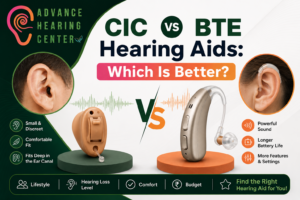
BTE hearing aids are among the most recommended devices for individuals with severe hearing loss. These devices are worn behind the ear and connected to an earmold that fits inside the ear canal.
Key Benefits:
- High-power amplification suitable for profound hearing loss
- Robust design, ideal for long-term use
- Can accommodate advanced features such as directional microphones and noise reduction
- Comfortable for extended wear
BTE models are versatile and available in a range of sizes and power levels. They are highly effective for people who need strong amplification to hear speech clearly.
For professional fitting and testing of BTE hearing aids, visit Advance Hearing Center.
2. Power Hearing Aids
Power hearing aids are specifically designed for those with severe to profound hearing loss. These devices deliver enhanced amplification without causing distortion, enabling users to hear sounds across a broader range of frequencies.
Advantages:
- Effective for both low- and high-frequency hearing loss
- Advanced models include features like feedback suppression and customizable settings
- Compatible with telecoil and Bluetooth accessories
Individuals with severe hearing loss often benefit from these high-power devices as they restore clearer speech perception, especially in noisy environments. Learn more about professional fittings at Advance Hearing Center.
3. RIC High-Power Devices (Receiver-in-Canal)
RIC high-power devices combine the power of traditional BTE aids with a discreet design. The receiver sits inside the ear canal, while the main component rests behind the ear.
Features:
- Comfortable and lightweight
- Reduced feedback due to the receiver placement
- Supports advanced amplification suitable for severe hearing loss
- Can include digital sound processing and wireless connectivity
RIC devices provide a balance of power, clarity, and discretion. They are especially popular among adults who want a modern and efficient solution without the bulk of traditional BTE aids.
Advanced Features to Look For
Modern hearing aids are more than just amplification devices. The best type of hearing aid for severe hearing loss should incorporate features that enhance sound clarity, comfort, and usability.
Key Features Include:
- Noise Reduction: Advanced digital hearing aids use sophisticated algorithms to filter background noise, making it easier to focus on speech and important sounds in crowded or noisy environments. This feature significantly enhances conversation clarity and reduces listening fatigue.
- Directional Microphones: These microphones are designed to pick up sounds coming from in front of the user while minimizing noises from the sides and rear. This helps improve speech understanding in situations like restaurants, meetings, or social gatherings.
- Feedback Cancellation: High-power hearing aids often produce feedback or whistling sounds. Feedback cancellation technology detects and eliminates these unwanted noises, ensuring a smooth and comfortable listening experience.
- Programmable Settings: Audiologists can program hearing aids with multiple settings tailored to the wearer’s unique hearing loss. Users can easily switch between settings for quiet rooms, busy streets, or outdoor spaces, ensuring optimal sound quality in any environment.
- Connectivity Options: Modern digital hearing aids offer Bluetooth or wireless connectivity, allowing users to stream audio directly from phones, TVs, or other devices. This integration enhances convenience and helps maintain clear communication in both personal and professional settings.
For expert advice on advanced hearing aids and programmable devices, you can consult Advance Hearing Center.
Selecting the Right Hearing Aid
Choosing the most suitable hearing aid for severe hearing loss involves several factors:
1. Degree of Hearing Loss
Detailed hearing assessments, including tympanometry test and high-frequency hearing test, help determine the severity and affected frequency ranges.
2. Lifestyle Needs
Consider your daily activities. Individuals who spend time in noisy environments may benefit from devices with enhanced noise reduction features.
3. Comfort and Fit
Custom earmolds improve sound transmission and reduce feedback. Professional fittings can be arranged through custom earmolds and fittings.
4. Budget Considerations
High-power and advanced devices often come with premium features. Discuss options with a professional to balance performance and cost.
Schedule a professional consultation for hearing aid selection at Advance Hearing Center.
Maintaining Your Hearing Aid
- Proper maintenance is crucial to ensure your hearing aid performs optimally and lasts for years. Here are some essential tips:
- Clean Your Device Regularly: Use approved cleaning tools and solutions to remove earwax, dust, and debris. Regular cleaning prevents blockages and maintains sound quality.
- Replace Batteries or Recharge as Needed: Follow the manufacturer’s instructions for battery replacement or recharging. High-power digital devices may consume more energy, so consistent monitoring ensures uninterrupted performance.
- Keep the Hearing Aid Dry: Avoid exposing your hearing aid to moisture, including rain, sweat, or steam from showers. Consider using a hearing aid drying kit or protective case to prevent water damage.
- Schedule Regular Checkups: Periodic visits to your audiologist allow for adjustments, software updates, and troubleshooting. Regular checkups help maintain sound clarity and ensure your programmable hearing aids are set optimally for your hearing needs.
- Handle with Care: Always store your hearing aid in a safe, dry place when not in use. Avoid dropping or mishandling the device to prevent physical damage.
When to Consider Cochlear Implants
In cases where traditional hearing aids are insufficient, cochlear implants may be recommended. These devices bypass damaged parts of the ear and directly stimulate the auditory nerve, providing significant improvement in hearing for severe to profound loss..
Conclusion
Severe hearing loss should not limit your ability to communicate or enjoy life. Choosing the best type of hearing aid for severe hearing loss, such as BTE hearing aids, power hearing aids, or RIC high-power devices, can significantly enhance hearing, comfort, and confidence. Advanced features like noise reduction, programmable settings, and advanced amplification make modern devices highly effective and adaptable.
For personalized advice, professional hearing tests, and fitting, visit Advance Hearing Center and explore their wide range of hearing solutions.