Living with profound hearing loss can feel overwhelming, but modern technology offers hope and practical solutions. While mild to moderate hearing loss can often be managed with standard devices, hearing aids for profound hearing loss are specifically designed to deliver ultra-powerful amplification, advanced sound processing, and clear communication support.
In this blog, we’ll explore what profound hearing loss means, how specialized devices such as ultra-power hearing aids and advanced BTE models help, and when to consider alternatives like cochlear implants in Cambodia. By the end, you’ll have a clear understanding of the best options available for improving hearing and quality of life.
What is Profound Hearing Loss?
Profound hearing loss is the most severe degree of hearing loss. People in this category may only detect very loud sounds—such as a jet engine, a fire alarm, or heavy machinery—and even then, clarity is often missing. Every day communication becomes extremely challenging, even with standard amplification devices.
According to audiology standards, profound hearing loss is typically defined as the inability to hear sounds softer than 90 decibels (dB). This level of hearing loss makes speech understanding almost impossible without the support of specialized devices, hearing tests in Cambodia, or implants.
Challenges of Profound Hearing Loss
Living with profound hearing loss goes beyond just “hearing less.” Here are some of the biggest challenges faced:
- Speech understanding – Even loud voices sound distorted.
- Social interaction – Difficulty following conversations often leads to withdrawal or isolation.
- Safety concerns – Everyday warnings such as alarms, doorbells, or traffic sounds may go unnoticed.
- Emotional impact – Frustration, stress, and reduced confidence in social settings are common.
That’s why people with profound hearing loss require powerful, specialized devices designed for more than just amplification—they need advanced processing that makes speech clearer and life safer. Learn more about hearing aid problems to understand common challenges.
Hearing Aids for Profound Hearing Loss
Not all hearing aids are suitable for profound hearing loss. The right device must provide high amplification, superior clarity, and maximum comfort while reducing background noise.
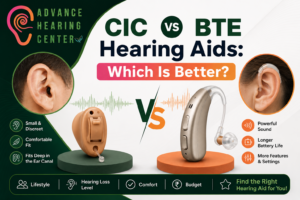
The most common solutions are behind-the-ear (BTE) hearing aids, specifically ultra-power models. These are larger than standard hearing aids, but their size allows for stronger batteries, more advanced processors, and higher levels of sound output.
Ultra-Power Hearing Aids: Designed for Maximum Amplification
Ultra-power hearing aids are created to meet the needs of individuals with profound hearing loss.
Key features include:
- Strong amplification to make even very soft sounds audible.
- Feedback suppression to prevent whistling, which is common at high amplification levels.
- Directional microphones to help focus on conversations in noisy environments.
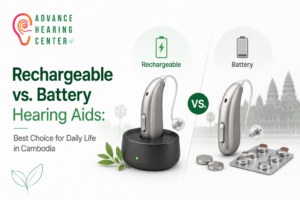
- Long-lasting power with large batteries or rechargeable options.
These devices are often considered a lifeline for people who cannot manage with standard devices.
Advanced BTE Models: Comfort with Power
The advanced BTE model is currently the most effective design for profound hearing loss.
Benefits include:
- Space for stronger components compared to small in-the-ear (ITE) devices.
- Durability and ease of handling, especially for seniors.
- Wireless connectivity for phone calls, TV, and streaming improves accessibility.
- Customizable programming to suit different sound environments.
While bulkier than smaller devices, today’s BTEs are sleeker, more discreet, and comfortable enough for all-day use.
Profound Hearing Loss Devices vs. Cochlear Alternatives
For some individuals, even the most advanced hearing aids may not provide enough benefit. In these cases, a cochlear implant or other surgical hearing solution may be considered.
Cochlear alternatives are recommended when:
- Amplification no longer provides speech understandin
- Word recognition scores remain very poor despite powerful hearing aids.
- A medical evaluation shows the inner ear’s hair cells are too damaged for hearing aids to work effectively.
An audiologist or ENT specialist usually guides the decision between high amplification hearing aids and surgical solutions.
Benefits of Hearing Aids for Profound Hearing Loss
Even with severe limitations, hearing aids for profound hearing loss offer significant benefits:
- Improved speech access – Speech may not sound perfect, but it becomes more recognizable.
- Increased environmental awareness – Important sounds like alarms, traffic, and doorbells become noticeable again.
- Social reconnection – Easier participation in conversations with family and friends.
- Safety and independence – Users gain confidence moving around in public or at home.
- Better mental well-being – Reduced frustration, improved confidence, and less isolation.
Choosing the Right Device for Profound Hearing Loss
When selecting a profound hearing loss device, consider:
- Audiologist guidance – A professional hearing test ensures accurate device fitting.
- Power levels – Ultra-power models are essential for sufficient amplification.
- Connectivity – Look for Bluetooth-enabled models for phone and media streaming.
- Rechargeability – Convenient for everyday use without frequent battery changes.
- Comfort and durability – Ensure the device fits well and can withstand daily wear.
When Hearing Aids Aren’t Enough
Despite the best technology, some individuals may find that hearing aids still do not meet their needs. In these cases, cochlear implants or other surgical hearing implants can be a more effective solution. An evaluation with an audiologist and ENT specialist is the best way to explore these options.
An evaluation with an audiologist and ENT specialist is the best way to explore these options.
Living with Profound Hearing Loss
Adapting to life with profound hearing loss is not easy, but with the right device, therapy, and support, individuals can reconnect with the world around them. Rehabilitation, lip-reading, and assistive listening devices can also enhance communication alongside hearing aids.
Conclusion
Hearing aids for profound hearing loss are more than just devices—they are a pathway back to communication, confidence, and independence. With modern solutions such as ultra-power hearing aids, advanced BTE models, and cochlear alternatives, people with profound hearing loss have more opportunities than ever to live fully.
If you or someone you know is struggling with profound hearing loss, consult a professional audiologist. A tailored solution can make all the difference in bringing sound—and life—back into focus.