Table of Contents
Hearing is an essential sense that connects us to the world, allowing communication, social interaction, and enjoyment of everyday life. But what about those who are deaf or have profound hearing loss? Can they hear using hearing aids?
In this comprehensive guide, we explore how hearing aids and related amplification devices work, the role of cochlear implants, and the possibilities of hearing restoration for individuals with severe auditory impairments. We also cover key features of modern auditory aids, professional assessments, and tips for selecting the right device.
Understanding Profound Hearing Loss
Profound hearing loss is the most severe form of hearing impairment. Individuals with this condition struggle to hear even very loud sounds, often requiring powerful devices or medical intervention to detect and interpret auditory signals.
Symptoms of profound hearing loss include:
- Difficulty understanding conversations even at close distances
- Inability to hear environmental sounds like alarms or traffic
- Reliance on lip-reading or visual cues for communication
Accurate diagnosis is crucial. Audiologists typically use assessments such as audiometry tests, ABR tests, and high-frequency hearing tests to evaluate the severity of hearing loss.
How Hearing Aids Work
Hearing aids are sophisticated amplification devices designed to improve sound perception for those with varying degrees of hearing loss. They do not “cure” deafness but can enhance residual hearing by amplifying sounds and making speech more intelligible.
Key functions of hearing aids include:
- Amplifying sounds to levels the user can detect
- Filtering background noise for clearer communication
- Customizable programming for specific listening environments
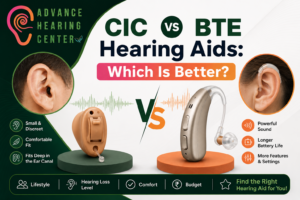
Modern auditory aids come in various styles, including behind-the-ear (BTE), receiver-in-canal (RIC), and in-the-ear (ITE) models. Custom fittings, available through services like custom earmolds and fittings, ensure comfort and optimal sound delivery.
Can Deaf People Hear Using Hearing Aids?
The answer depends on the type and degree of hearing loss:
Partial Deafness:
- Individuals with some residual hearing often benefit significantly from hearing aids.
- Amplified sound can improve communication and reduce social isolation.
Profound Hearing Loss:
- In many cases, conventional hearing aids may provide limited benefit.
- Devices can amplify sounds, but the user may still struggle with speech comprehension.
- Advanced solutions, including cochlear implants, are often more effective in restoring meaningful hearing.
Bone-Anchored Devices (BAHA):
- For individuals with conductive hearing loss, BAHA services transmit sound through bone conduction, bypassing damaged outer or middle ear structures.
Hearing Restoration: While hearing aids cannot fully restore normal hearing, they are vital tools in auditory rehabilitation. Paired with therapies, lip-reading, and training, hearing aids enable many deaf individuals to participate in daily life.
Types of Hearing Aids for Deaf and Profound Hearing Loss
Behind-the-Ear (BTE) Devices
- Provide high-power amplification suitable for profound hearing loss
- Can incorporate directional microphones, noise reduction, and programmable settings
- Effective for both adults and children
Receiver-in-Canal (RIC) Devices
- Offer discreet design and enhanced sound quality
- Suitable for individuals with residual hearing but limited effectiveness for profound loss alone
Cochlear Implants
- Recommended when conventional hearing aids are insufficient
- Directly stimulate the auditory nerve, bypassing damaged parts of the ear
- Often combined with speech therapy for optimal results
Bone-Anchored Hearing Aids (BAHA)
- Transmit sound via bone conduction
- Ideal for conductive hearing loss or single-sided deafness
Specialized Auditory Aids
- Include amplification devices with advanced programming, connectivity, and noise reduction features
- Custom fittings, such as ear impressions, ensure comfort and efficiency
Features to Look for in Modern Hearing Aids
- Noise Reduction: Filters background noise for clearer conversations.
- Directional Microphones: Focus on sounds in front of the user while minimizing side and rear noise.
- Feedback Cancellation: Eliminates whistling or squealing sounds.
- Programmable Settings: Allows audiologists to customize amplification for different environments.
- Connectivity Options: Some devices offer Bluetooth or wireless links for phones, TVs, and streaming devices.
- Comfort and Fit: Custom earmolds or impressions ensure the device sits securely in the ear and delivers optimal sound.
For professional fittings and advice, visit Advance Hearing Center.
Assessment and Professional Testing
Before selecting a hearing aid, a thorough evaluation is essential. Key tests include:
- Baby Hearing Test: Early detection of hearing loss in infants
- Hearing Tests in Cambodia: Comprehensive audiological assessment
- Tympanometry Test: Measures middle ear function
- ABR Test: Evaluates auditory nerve responses
These assessments help audiologists determine the most suitable device and program it to match the user’s hearing profile.
Maintaining Your Hearing Aid
Proper maintenance ensures longevity and optimal performance:
- Clean regularly: Remove earwax and debris using approved tools
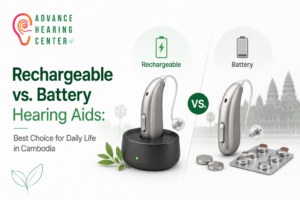
- Replace batteries or recharge: Follow manufacturer instructions for uninterrupted performance
- Keep dry: Avoid moisture exposure; use protective cases or drying kits
- Schedule regular checkups: Periodic servicing at hearing aid servicing centers ensures functionality
- Handle carefully: Prevent physical damage by storing the device safely
Limitations and Expectations
It is important to have realistic expectations:
- Hearing aids improve hearing clarity but do not restore normal hearing
- Cochlear implants and bone-anchored devices may provide better results for profound loss
- Consistent use, therapy, and follow-ups optimize outcomes
Conclusion
Can deaf people hear using hearing aids? The answer depends on the type and severity of hearing loss. For individuals with profound hearing loss, hearing aids may partially restore hearing, while advanced solutions like cochlear implants or BAHA devices offer more substantial improvements.
With modern auditory aids, amplification devices, and professional assessments at centers like Advance Hearing Center, many individuals regain the ability to perceive sound, communicate effectively, and improve their quality of life. Early intervention, custom fittings, and proper maintenance are key to achieving the best results.