Table of Contents
TLDR: Aid hearing devices are small electronic tools that pick up, process, and amplify sound for people with hearing loss. They come in several styles — from behind-the-ear to nearly invisible in-canal models — and range from basic amplifiers to AI-powered devices with Bluetooth and health tracking. The right one depends on your hearing loss type, lifestyle, and budget. This guide walks through all of it.
If you’ve just been told you need a hearing device, the first reaction for most people is something between relief and confusion. Relief that there’s actually a solution. Confusion because there are suddenly a hundred options, a lot of technical terms, and prices ranging from a few hundred dollars to several thousand.
Where do you even start?
This guide is the answer to that. We’re going to walk through what aid hearing devices actually are, how they work, what separates a basic model from a premium one, which brands are worth knowing, and how to figure out which type actually fits your life. No jargon overload. Just clear, practical information.
At Advance Hearing Center, we’ve helped patients across Cambodia find the right hearing solution for years — and the questions people ask us are almost always the same. This guide answers all of them.
What Are Aid Hearing Devices?
An aid hearing device is an electronic device worn in or around the ear that helps people with hearing loss hear more clearly. It picks up sounds from the environment, processes them digitally, and delivers amplified, cleaner audio to your ear.
That’s the basic definition. But here’s what most people don’t expect: the devices available in 2026 look almost nothing like what their parents or grandparents wore. The old chunky beige hearing aids that whistled and buzzed? Those are mostly gone. What’s out there now is genuinely small, often nearly invisible, and in many cases smarter than your average smartphone.
Today’s premium aid hearing devices use artificial intelligence that adapts to your surroundings in real time, Bluetooth that streams phone calls and TV audio directly into your ears, and some models even track your steps, detect falls, and monitor activity levels. It’s a completely different category than it was even five years ago.
Signs You Might Actually Need One
People usually wait a lot longer than they should. Research consistently shows the average person waits around seven years between first noticing hearing problems and actually getting help. That’s seven years of misheard conversations, strained social situations, and unnecessary exhaustion.
Here are the signs worth paying attention to:
You’re asking people to repeat themselves regularly. Not once in a while — regularly. If this is happening several times a day, it’s not a coincidence.
Noisy places feel exhausting. Following a conversation in a busy restaurant or market takes so much focus that you leave feeling drained. This kind of listening fatigue is one of the earliest real signs of hearing loss.
The TV volume keeps creeping up. And the people around you keep turning it back down.
You’re missing sounds others catch easily. Doorbells, someone calling your name from another room, the kettle boiling.
Social situations feel harder than they used to. You find yourself staying quieter in group conversations because following them is genuinely difficult. Maybe you’ve started quietly avoiding loud events altogether.
How Aid Hearing Devices Work
Every hearing device, regardless of brand or price, does the same five things in sequence:
- Microphone picks up sound from your environment — speech, background noise, music, everything.
- Processor converts and cleans that sound into a digital signal. This is where the real quality differences between devices show up. Basic models amplify most sounds fairly equally. Premium models use AI chips to isolate speech, reduce noise, and adjust based on where you are.
- Amplifier strengthens the signal according to your hearing prescription — boosting the specific frequencies you have trouble with, not everything at once.
- Receiver delivers the processed sound directly into your ear canal.
- Power source — rechargeable or disposable battery — keeps the whole thing running.
The entire process takes milliseconds. You don’t notice any delay. It just sounds like hearing.
Types of Aid Hearing Devices Explained
This is where most people get confused because of all the abbreviations. Here’s each type in plain language.
Behind-the-Ear (BTE)
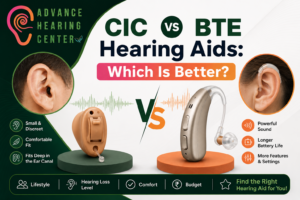
The main body sits behind your ear and connects to an earmold inside your canal via a thin clear tube. It’s the most versatile style — handles mild right through to profound hearing loss. There’s more room inside for electronics, so BTE devices tend to have better battery life and can deliver more amplification than smaller styles.
They’re also easier to handle, which is why they’re often recommended for elderly users and young children. Not the most discreet option, but for a lot of people that honestly doesn’t matter as much as performance does.
Receiver-in-Canal (RIC)
Looks similar to BTE from a distance. The key difference is the speaker (receiver) moves out of the main body and sits directly in the ear canal, connected by a thin wire. Sound quality tends to be better because the sound source is closer to your eardrum. The overall profile is smaller and slimmer.
RIC is the most widely fitted hearing device style globally right now. That’s not marketing — it’s because this style hits the best balance between performance, size, and features for most people.
Completely-in-Canal (CIC)
Custom-made to fit almost entirely inside the ear canal. From a normal conversation distance, you genuinely can’t see it. That’s the main reason people choose it.
The trade-off is size. There’s limited space inside for electronics, so most CIC devices don’t have Bluetooth, have smaller batteries that need more frequent changing, and can’t deliver as much amplification as larger styles. Best suited for mild to moderate hearing loss. Learn more about CIC hearing aids in Cambodia if this style appeals to you.
In-the-Canal (ITC)
Slightly larger than CIC — sits partly in the canal rather than entirely inside it. That bit of extra room allows for better controls, directional microphones on some models, and slightly longer battery life. Good middle ground between discretion and practicality.
In-the-Ear (ITE)
Fills the outer bowl of the ear. More visible than canal styles, but noticeably easier to handle — bigger controls, longer battery life, more room for features. Often works well for elderly users or anyone who finds tiny devices difficult to manage. Can handle moderate to severe hearing loss effectively.
Bone-Anchored Hearing Aid (BAHA)
A different approach entirely. Instead of amplifying sound through the ear canal, a BAHA transmits sound vibrations through the skull directly to the inner ear. It’s used for people who can’t wear conventional hearing aids due to ear canal abnormalities, single-sided deafness, or conductive hearing loss. Not for everyone, but for the right patient it can be a genuinely better solution than conventional aids.
Prescription vs Over-the-Counter: What’s the Difference?
This distinction matters more than most people realise.
Prescription aid hearing devices are fitted by a qualified audiologist based on your specific audiogram. They’re programmed to your exact hearing profile — boosting the precise frequencies you’re missing, not just amplifying everything. They come with professional aftercare: follow-up appointments, adjustments, and long-term support.
Over-the-counter devices are pre-set amplifiers sold without a hearing test. They’re cheaper. They’re also a poor substitute for most people with real hearing loss. They amplify everything — including background noise — rather than targeting the frequencies you actually need help with. For someone with very mild, consistent hearing loss, they might offer some basic benefit. For most people, they’re a frustrating experience that puts them off hearing aids entirely.
At Advance Hearing Center, every device we fit is prescription-based. We run a proper audiometry test first, then recommend and program a device that matches your actual hearing profile.
Features That Actually Matter
There are a lot of specs on hearing aid brochures. Here’s what genuinely makes a difference in daily life.
Noise reduction — the single most important feature for most people. Good noise reduction is what separates a device that helps you follow conversations in noisy environments from one that just makes everything louder and more confusing.
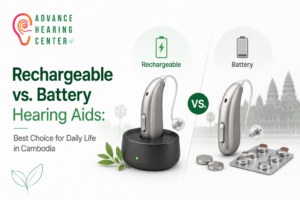
Rechargeable batteries — you charge overnight, you wear all day. No fumbling with tiny size 10 batteries every few days. This has become standard on most mid-range and premium RIC and BTE devices.
Bluetooth connectivity — streams phone calls, music, and TV audio directly into your hearing devices. For anyone who uses their phone regularly or watches a lot of TV, this is genuinely useful rather than just a nice-to-have.
Automatic program switching — the device detects whether you’re in a quiet room, a noisy market, or a meeting room, and adjusts settings without you touching anything.
Tinnitus masking — if ringing in the ears is part of your situation, some devices include built-in sound relief. The connection between hearing aids and tinnitus is worth understanding if this applies to you.
Smartphone app control — adjust volume, switch programs, and check battery level from your phone. More practical than it sounds once you’re actually wearing the device every day.
Technology Tiers: Entry, Mid, and Premium
Most brands organise their range into three technology levels. Here’s what that actually means in practice.
Entry-level devices do the basics well. Decent amplification, basic noise management, often disposable batteries. Good for someone with mild loss who mostly needs help in quiet, one-on-one conversations. Struggles in complex listening environments.
Mid-range devices add meaningful features: better noise reduction, Bluetooth, rechargeable batteries, multiple automatic programs. This is where most people working and living normal social lives land. The performance jump from entry-level is real and noticeable.
Premium devices use real-time AI processing. The device analyses your acoustic environment continuously, separates speech from noise, and adapts instantly. Some include health tracking, fall detection, and deep smartphone integration. The performance in genuinely difficult listening situations — busy restaurants, noisy family gatherings, large meetings — is significantly better than lower tiers.
The honest advice: don’t assume you need premium if entry-level covers your actual listening situations. And don’t buy entry-level just to save money if you’re regularly in difficult listening environments — you’ll use it less and get less out of it.
Aid Hearing Device Brands Worth Knowing
Advance Hearing Center carries the world’s leading manufacturers. Here’s a plain-English summary of what each one does well.
Signia — known for Own Voice Processing, which reduces the strange echo-in-a-barrel feeling new wearers sometimes notice. A good first device brand for first-time users.
Phonak — consistently strong performance in noisy environments. Their SmartSpeech technology is among the best for speech clarity in difficult situations. Popular with active users and professionals.
Starkey — the only major brand with built-in fall detection and health tracking. A natural fit for elderly users or anyone whose family wants that extra safety layer.
GN ReSound — Deep Neural Network audio processing delivers impressive clarity in complex sound environments. Strong Bluetooth integration.
Rexton — solid technology at a more accessible price point. Their BiCore platform is notably reliable in Cambodia’s humid climate.
Oticon — their “open sound” processing philosophy is designed to feel more natural, giving the brain more of the full sound scene rather than filtering everything through a narrow focus.
No single brand wins across every category. The right brand depends on your lifestyle, hearing profile, and what matters most to you day-to-day.
What Do Aid Hearing Devices Cost?
Prices vary widely. Here’s a realistic breakdown:
Entry-level: Basic digital amplification, limited noise management. Good for quiet daily environments. For people starting out or on a tight budget.
Mid-range: Bluetooth, rechargeable batteries, automatic programs, solid noise reduction. This is where most people find the right balance of performance and value.
Premium: Real-time AI, advanced noise separation, health tracking, full smartphone integration. Built for people who need strong performance across genuinely difficult listening environments.
Most fittings are binaural — both ears — which means prices effectively apply twice. Always ask your clinic exactly what’s included in any quoted price. Some include the hearing test, fitting, follow-up appointments, and repairs in the package price. Others price the device alone and bill for services separately.
The full breakdown of how much hearing aids cost is worth reading before you compare quotes.
Aid Hearing Devices for Children vs Elderly
The device type that works best isn’t the same for a seven-year-old and a seventy-year-old. Worth being clear about this.
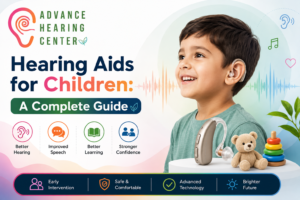
For children, the priority is durability, reliability, and the ability to grow with the child’s hearing needs. BTE devices are most commonly fitted for children because they’re easier to manage, can be connected to classroom FM systems, and can accommodate stronger amplification as needed. A proper baby hearing screening test or ABR test should happen before any device decision.
For elderly users, the priority shifts to ease of handling. Smaller devices are harder to manage for anyone with arthritis or reduced dexterity. Rechargeable options eliminate the frustration of changing tiny batteries. Larger ITE or BTE devices often serve elderly wearers better than the smallest canal-style options, even if they’re slightly more visible.
Common Myths About Aid Hearing Devices
A few things people believe that aren’t true.
“They’ll make everything unbearably loud.” A properly programmed hearing device doesn’t amplify everything equally. It targets the specific frequencies you’re missing. It shouldn’t feel overwhelming — if it does, the programming needs adjustment, not the device itself.
“They’re obvious and embarrassing.” Most current RIC and BTE devices are slim, small, and available in skin-toned finishes. People literally walk past wearers without noticing. Glasses are more visible than most modern hearing aids.
“It means my hearing is gone for good.” A hearing device manages hearing loss — it doesn’t fix the underlying cause. But wearing one consistently can actually help prevent the cognitive decline associated with untreated hearing loss. Not wearing one has real consequences beyond just the inconvenience.
“I’ll adjust to it straight away.” The brain takes a few weeks to adapt to processing amplified sound, especially if you’ve had hearing loss for a long time. This is completely normal. The follow-up appointments during the first few months matter a lot for long-term success.
How to Choose: A Simple Framework
Start here, in this order.
Step 1: Get a proper hearing test. Everything else depends on knowing your actual audiogram — the type and degree of your hearing loss. Guessing at this stage is expensive.
Step 2: Think about your lifestyle honestly. Where do you spend most of your time? Quiet home environments? Busy offices? Loud social situations? Your real daily life should drive the technology level you choose, not aspirational scenarios.
Step 3: Consider handling practicality. Can you comfortably handle very small devices? Do you want to change batteries or charge overnight? These practical questions matter more than most people account for when choosing.
Step 4: Talk to an audiologist before deciding on a brand. Every brand has strengths. The right brand for you depends on your hearing profile and priorities — which an audiologist can match properly. Don’t let marketing material make this decision for you.
Step 5: Ask about hearing aid servicing and aftercare. A device without ongoing support is a gamble. What happens when you need adjustments? What if it needs repair? The aftercare matters as much as the device itself.
Taking Care of Your Device
Aid hearing devices sit in or around your ear all day. Moisture, earwax, and dust are their main enemies. A few habits make a big difference:
Wipe the device down with a dry cloth each evening. Never use water directly on it. Use the small cleaning brush (usually included) to clear the microphone and receiver ports regularly. Keep a wax guard replacement routine going — blocked wax guards are the single most common cause of a device that “stops working.”
Store the device in its case overnight, ideally with a drying capsule if you live in a humid climate. Cambodia’s humidity is a real factor — devices need a bit more care here than in drier climates.
If something sounds different or the device stops performing the way it should, don’t wait. Bring it in for a professional hearing aid servicing check before a small issue becomes a bigger one.